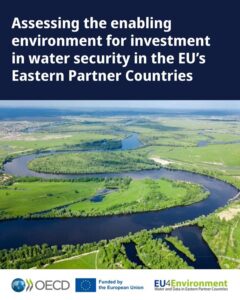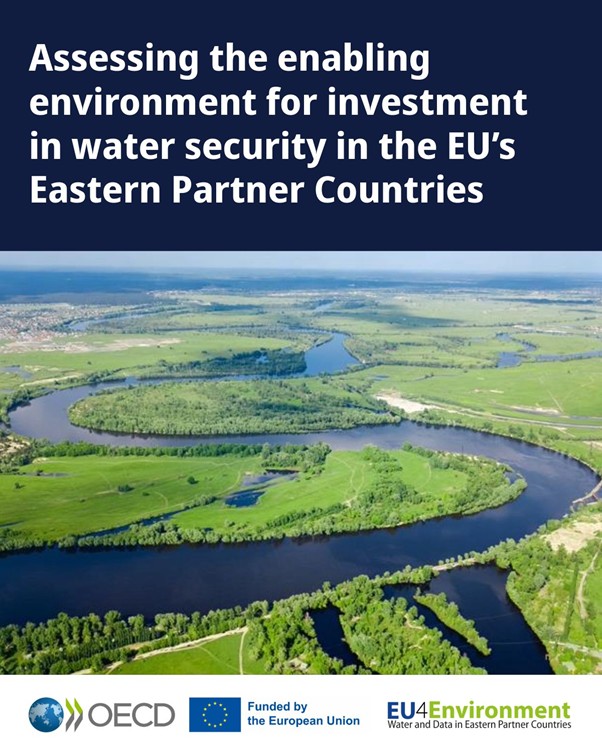
How can countries strengthen investment in water security at a time of growing climate, infrastructure, and governance pressures? A new analytical paper developed under the EU4Environment – Water Resources and Environmental Data Programme offers timely insights into this question for the EU’s Eastern Partner Countries.
The study applies the OECD Water Investment Scorecard to assess the enabling environment for water security investment in Armenia, Azerbaijan, Georgia, Moldova, and Ukraine, identifying progress to date alongside persistent structural challenges.
Understanding the investment challenge
Water security investments depend on more than funding alone. The OECD analysis highlights how governance quality, regulatory frameworks, cost recovery mechanisms, and institutional coordination shape whether investments are viable, bankable, and sustainable over the long term.
Across the Eastern Partner Countries, the assessment shows growing alignment with EU water policy principles, but also points to gaps that continue to limit investment, including fragmented planning, weak enforcement of economic instruments, and high levels of non-revenue water.
Non-revenue water, defined as water that enters the distribution system but is not billed to customers, remains a major concern. High losses undermine the financial sustainability of utilities and reduce confidence among potential investors, even where water demand and climate risks are rising.
Key policy directions emerging from the analysis
The paper outlines a set of practical policy directions to strengthen the enabling environment for water security investment. These include learning from EU accession experiences in countries that have followed comparable reform pathways, and translating those lessons into coherent national strategies and investment plans for the water sector.
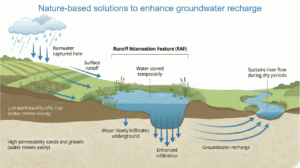
Strengthening regulatory enforcement and economic instruments is highlighted as a critical step to improve cost recovery and water quality outcomes. At the same time, the analysis encourages countries to diversify financing sources by exploring climate finance, blended finance, and nature-based solutions, rather than relying solely on traditional public funding.
Together, these measures aim to shift water investment from short-term fixes towards long-term resilience.
Why this matters for FARMWISE
These findings resonate strongly with FARMWISE, which addresses water security through integrated data, decision-support tools, and governance-aware solutions. FARMWISE’s work on water balance, risk assessment, and evidence-based decision-making directly supports the type of investment-ready environments described in the OECD analysis.
By linking robust data, transparent decision processes, and realistic operational constraints, FARMWISE contributes to the foundations needed for effective water security investment, not only within the EU, but also in neighbouring regions facing similar climate and infrastructure pressures.
Learn more
The full OECD paper provides a detailed country-by-country assessment and policy recommendations for strengthening water security investment across the Eastern Partnership region.
👉 Read the report:
https://www.oecd.org/content/dam/oecd/en/publications/reports/2025/10/assessing-the-enabling-environment-for-investment-in-water-security-in-the-eu-s-eastern-partner-countries_2e8d2698/3f5d9a13-en.pdf