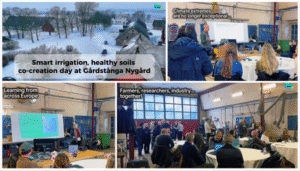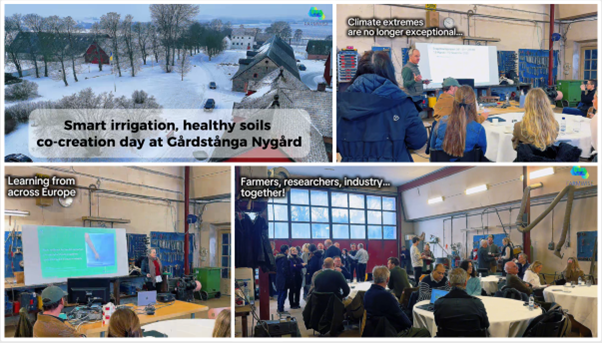
On 11 February 2026, FARMWISE partners and regional stakeholders gathered at Gårdstånga Nygård, Sweden, for a full-day exchange focused on two of the most pressing challenges facing European agriculture: water management and soil health under climate extremes.
Hosted by Gustaf Ramel at Gårdstånga Nygård in conjunction with Lund University, the event brought research, farming practice, technology providers and regional expertise into the same room: which is exactly the kind of creative environment FARMWISE is designed to foster.
Watch the highlights on YouTube here
Watch the interviews with the stakeholders here
Why FARMWISE Organises Stakeholder Events
FARMWISE is not developing tools in isolation. The project’s core ambition is to transform agricultural resource management by combining AI, remote sensing, precision agriculture and water expertise into decision-support systems that work in real-world settings.
To do that, farmers, advisors, technology companies, researchers and policymakers must test ideas together.
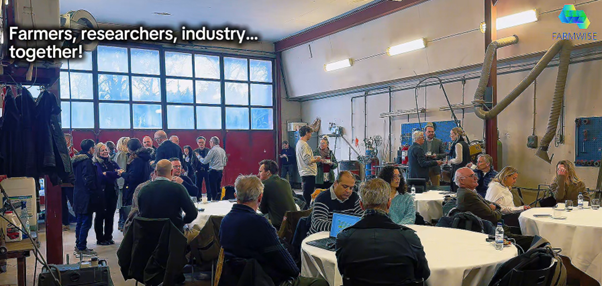
Stakeholder events like the Gårdstånga Nygård workshop serve to:
• Validate FARMWISE tools against real operational needs
• Connect regional case studies across Europe
• Stress-test innovations under different climatic and regulatory contexts
• Explore scalability and upscaling potential
• Identify risks, opportunities and desired futures
In short, they turn research outputs into grounded, applicable solutions.
The Gårdstånga Nygård Case: How and Why It Started
The day opened with a welcome from Gustaf Ramel, introducing the Gårdstånga Nygård case: one of FARMWISE’s demonstration sites.
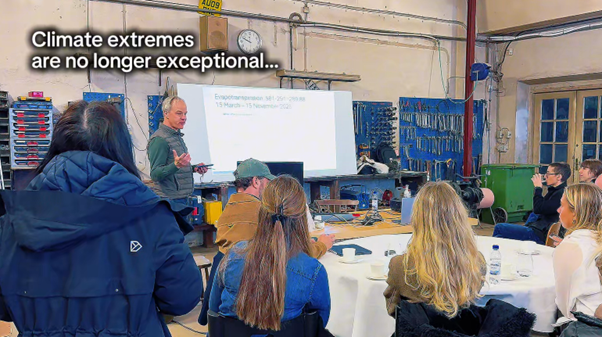
Gårdstånga Nygård (located near Lund in Sweden) represents a real, working agricultural environment where water management, irrigation efficiency and soil resilience are not theoretical concepts but daily operational decisions. AB Gårdstånga Nygård is an active partner in the FARMWISE consortium, ensuring direct farmer involvement in tool development and validation
The case illustrates how:
• Climate variability is already affecting irrigation decisions in southern Sweden
• Both excess water and drought periods create operational uncertainty
• Farm-level data must connect to basin-level water management
The question posed at the start of the day – “How and why did it all start?” – anchored discussions in lived experience rather than abstraction.
“Too Much Water / Too Little Water”
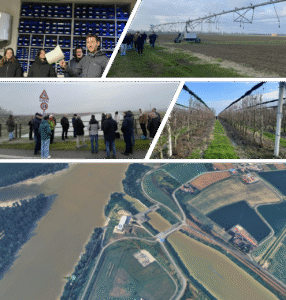
One of the most powerful sessions compared irrigation challenges across Europe. The perspectives from the Bologna case study highlighted the paradox increasingly faced by European farmers:
• Flood risk and drainage challenges in some regions
• Severe drought and water scarcity in others
• Increasing unpredictability in seasonal water availability
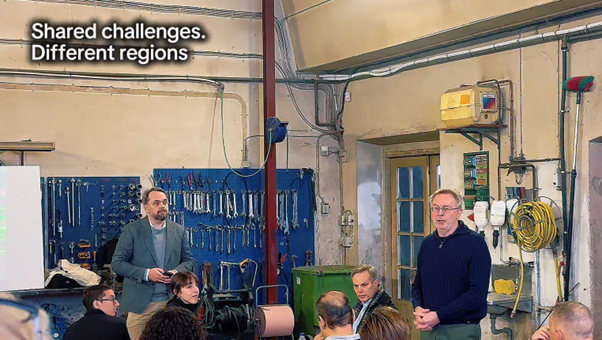
By placing southern Sweden in conversation with southern Europe, the workshop reinforced a core FARMWISE principle: local solutions must sit within a European systems perspective
FARMWISE Innovations in Practice
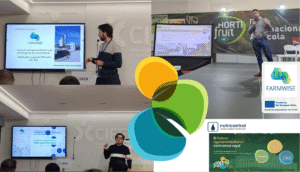
Researchers and partners from Lund University and beyond delivered rapid pitches on FARMWISE tools and solutions, focusing specifically on:
• Scalability
• Upscaling potential
• Integration across water, soil and nutrient management
Contributors included:
• Ronny Berndtsson (Lund University)
• Maria Martinez Canovas (Agrodit)
• Magnus Persson (Lund University)
• Hossein Hashemi (Lund University)
• Iria Feijoo (Lund University)
• Jing Li (Amore Aqua AB)
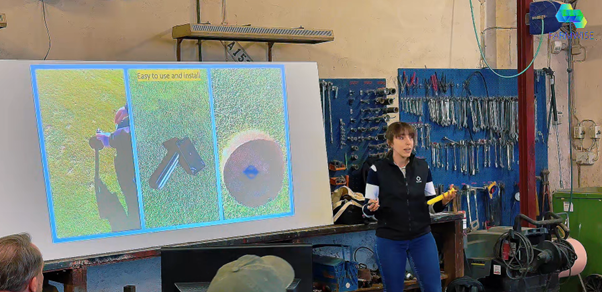
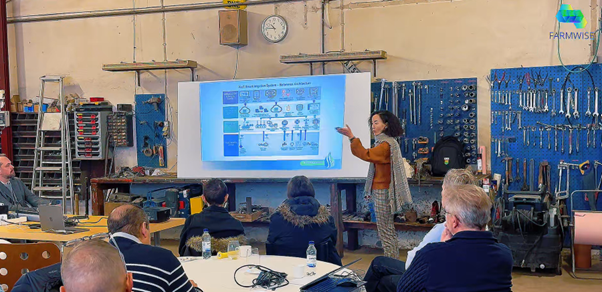
The emphasis was not only on technical performance, but on how decision-support systems can meaningfully support farmers and policymakers under real constraints.
Exploring Futures in Skåne
A guided futuring exercise was led by Therese Parodi, coordinator for the Kävlingeåns Water Council, promoting sustainable water governance within the Kävlingeån river basin. Therese invited participants to step back from immediate technical challenges and consider:
• What are the biggest risks for irrigation and soils in Skåne?
• What opportunities are emerging?
• What would a desirable water future look like in 10–20 years?
This forward-looking approach reflects FARMWISE’s ambition to support long-term water policy and sustainable agricultural planning, not just short-term optimisation.
Industry and Academic Perspectives
The coffee break became an informal demonstration space, with irrigation manufacturer Lyckegård showcasing machinery and engaging directly with researchers and farmers.
The programme then moved into Soil Health:
Gustav Nadal (Letavis) posed a provocative question: can Amovaris, a biostimulant developed by Letavis and based on a naturally occurring peptide related to oxytocin increase harvest yields sufficiently to reduce irrigation demand?
Professor Jennie Barron (SLU Ultuna) is a leading expert in agricultural water management and climate adaptation. Her presentation highlights the urgent need for proactive water strategies to safeguard Sweden’s agricultural production capacity under increasing climate variability.
Professor emeritus Håkan Wallander (Lund University’s Department of Biology) is a distinguished soil ecologist whose decades of research have deepened our understanding of soil biological processes and their role in sustainable agricultural systems.
Professor Lennart Olsson is an internationally engaged researcher focused on perennial wheat and regenerative grain systems. He is a member of The Land Institute’s global network advancing climate-resilient and soil-building agriculture to strengthen long-term food security.
Together, these sessions linked water management with soil biology, nutrient cycling and yield outcomes: reinforcing the interconnected systems approach at the heart of FARMWISE.
From Case Study to Scalable Impact
The Lund stakeholder event demonstrated how FARMWISE connects:
• Farm-level practice (Gårdstånga Nygård)
• Regional water management
• European case study comparison with a web-linked presentation by PhD, Francesco Cavazza showcasing how advanced the Italian Po valley is in regard to collectively on a regional basis managing 3,5 million hectares of water demand and supply in order to secure food production.
• AI-enabled decision-support systems
• Soil health innovation
• Industry engagement
By bringing quadruple helix stakeholders together: researchers, farmers, companies and policymakers, FARMWISE strengthens the pathway from research innovation to practical implementation.
In conclusion, as climate pressures grow, events like this ensure FARMWISE solutions remain both scientifically robust and practically implementable, while delivering real socio-economic value.
Watch the highlights on YouTube here
Watch the interviews with the stakeholders here