New study reveals hidden economic and environmental costs of soil compaction in Europe
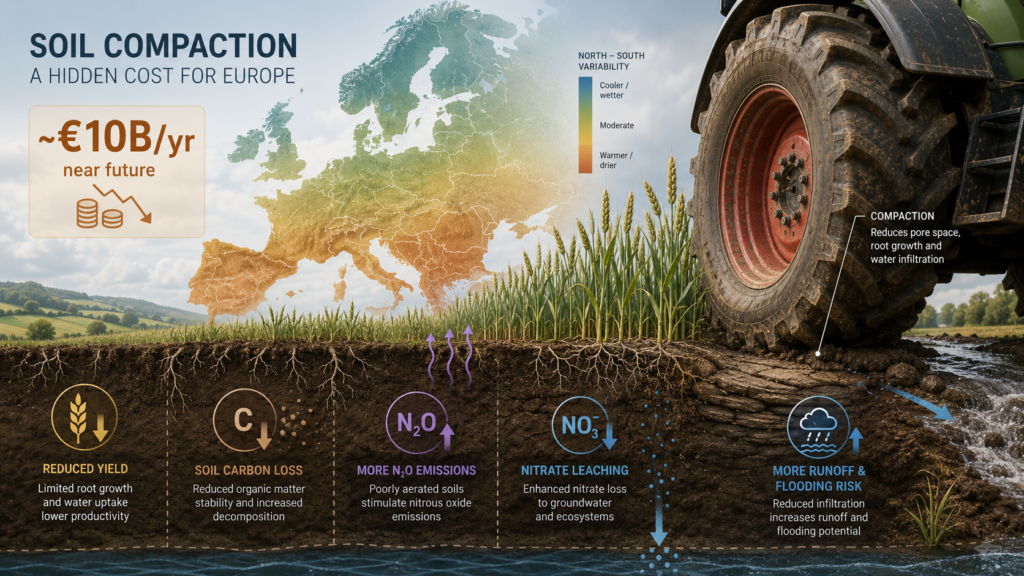
A new open-access study co-authored by FARMWISE researchers Alejandro Romero-Ruiz, Landon J. S. Halloran and colleagues has used a continent-scale modelling framework to investigate how soil compaction could affect European agriculture and the wider environment under future climate conditions. Soil compaction happens when heavy agricultural machinery compresses the soil, reducing the space available for air […]
Policy and practice watch:
Questions FARMWISE shares with the EU CAP Network Every so often a newsletter lands in the inbox that feels less like external news and more like a mirror held up to your own work. The EU CAP Network’s May edition was one of those. Read it with FARMWISE concerns in mind and the same handful […]
From nitrate hotspots to hard choices: FARMWISE at EGU 2026
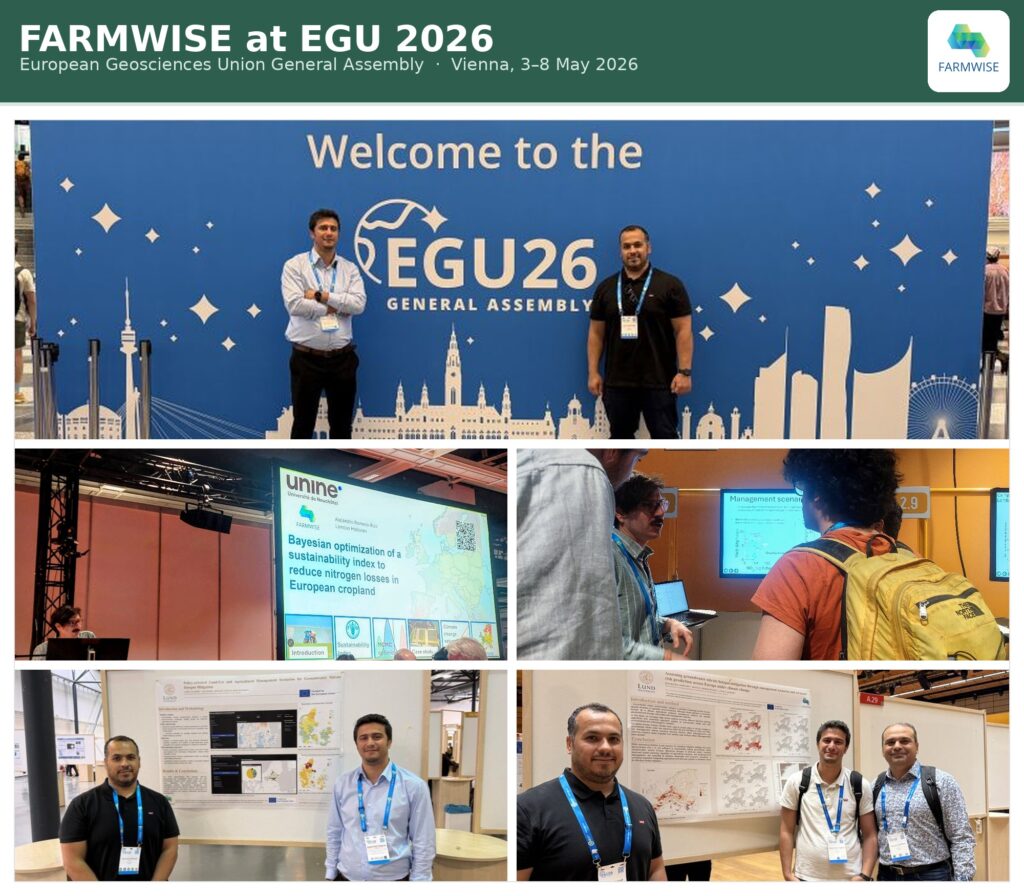
Some scientific problems are easier to find than to fix. Nitrate pollution in groundwater is one of them: diffuse, stubborn, and deeply bound up with the way food is grown across Europe. It can be mapped. It can be measured. But deciding what to do about it, where to act first, and how to balance […]
Drawing Down the Well
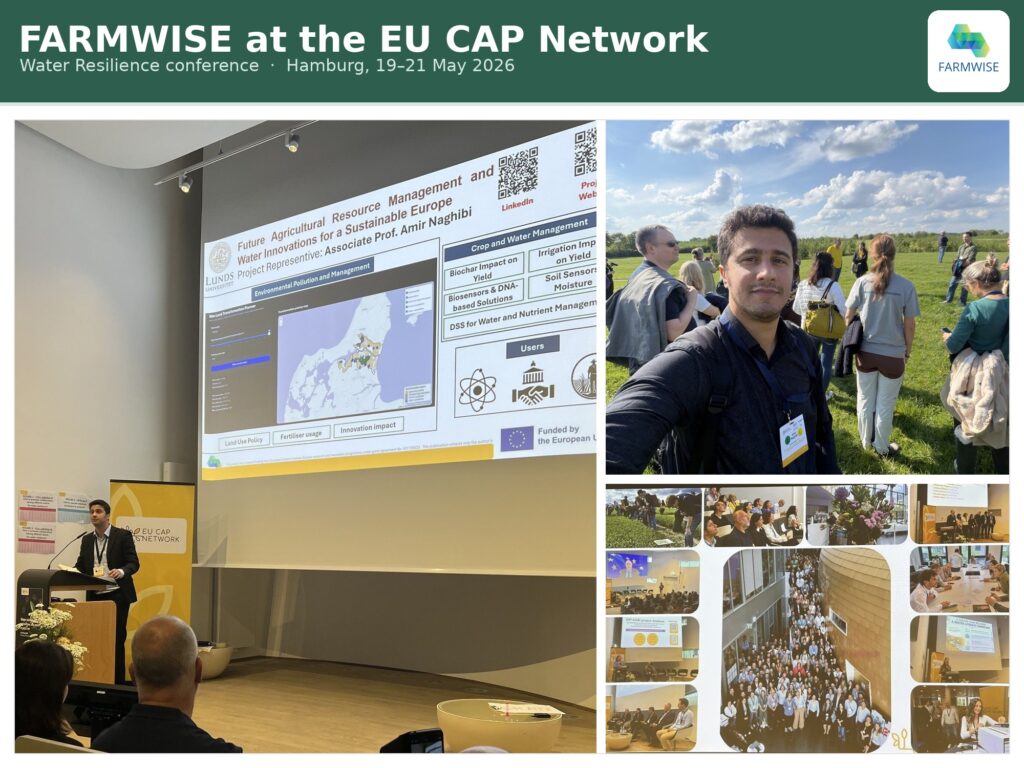
For three days in May, Hamburg played host to a question with no easy answer: how can Europe’s farmers keep working the land as the water they depend on grows scarcer and less predictable? The occasion was the EU CAP Network conference “Water Resilience: The role of the Common Agricultural Policy (CAP) in promoting sustainable […]
Standing in for the team: FARMWISE takes its climate-resilience research to Vienna
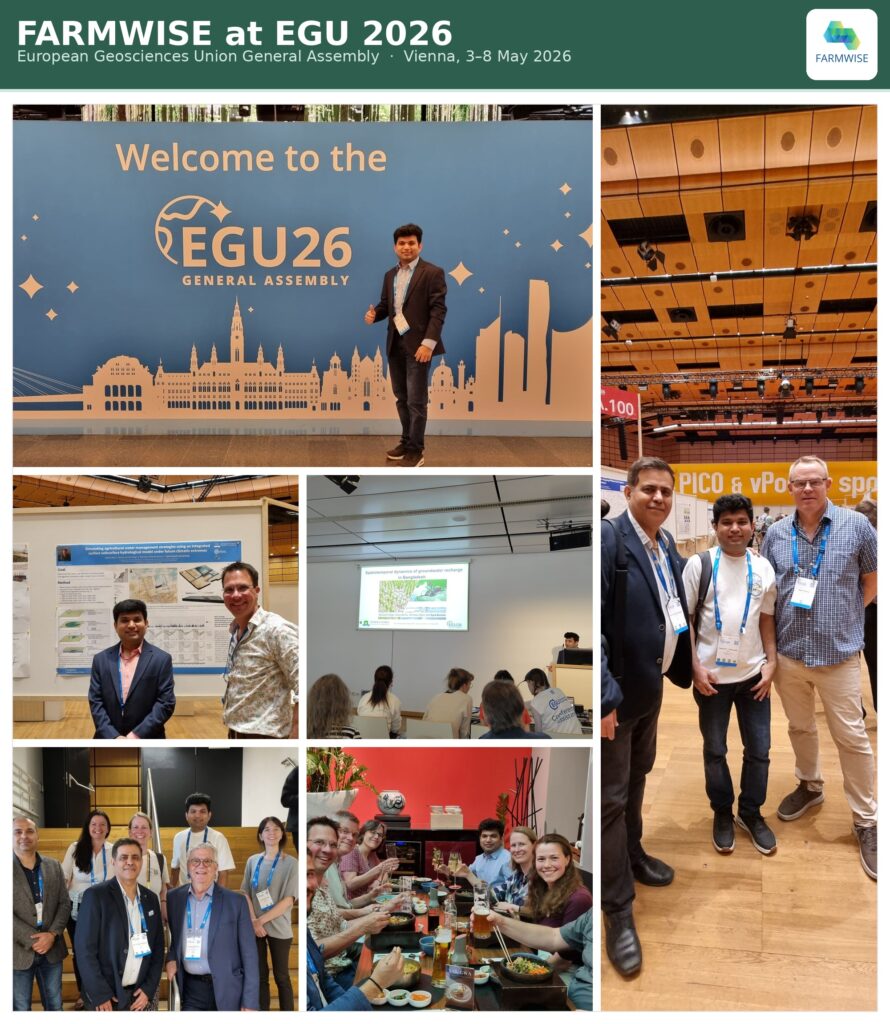
When you have spent months building a model and you finally have results worth sharing, the natural reward is to stand up in front of your peers and present them yourself. This year, one of Wageningen University’s hydrogeologists could not make that journey to Vienna, so FARMWISE partner Syed Mustafa carried his work there for […]
Water, Soil and the Future of Farming: FARMWISE Stakeholder event at Gårdstånga Nygård, Sweden
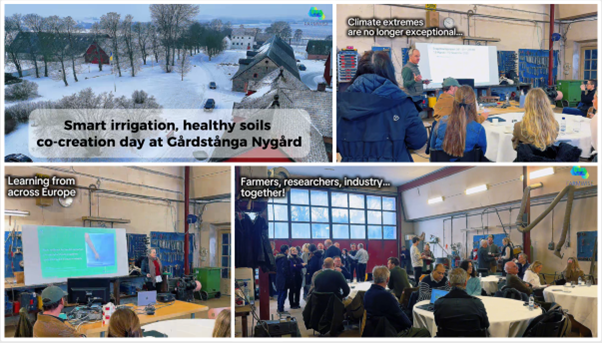
On 11 February 2026, FARMWISE partners and regional stakeholders gathered at Gårdstånga Nygård, Sweden, for a full-day exchange focused on two of the most pressing challenges facing European agriculture: water management and soil health under climate extremes. Hosted by Gustaf Ramel at Gårdstånga Nygård in conjunction with Lund University, the event brought research, farming practice, […]
FARMWISE at HortiFruit: Turning Research into Dialogue with the Agri-Food Sector in Southeast Spain
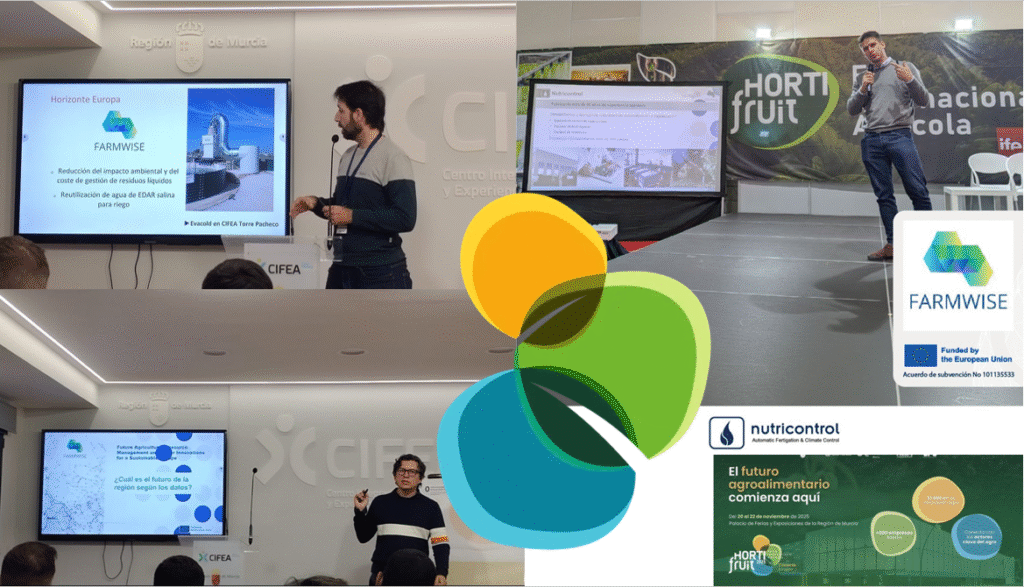
How can digital tools, data, and scientific knowledge better support farmers, companies, and public authorities facing increasing water and climate pressures?And what happens when European research projects step out of the lab and into direct conversation with the agri-food sector? In November, FARMWISE brought these questions to HortiFruit, one of the leading trade fairs for […]
FARMWISE in Bologna: From Project Review to Real-World Questions
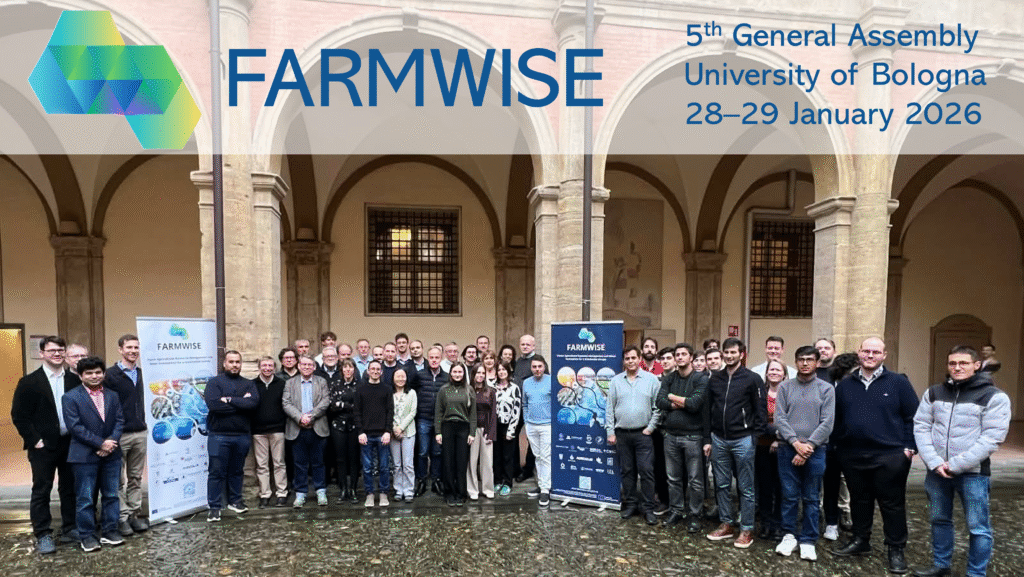
What does it take to turn complex research into tools that actually support decisions on water and agriculture? How do models, data, and digital systems hold up when they meet real operational and policy constraints? These questions shaped the 5th FARMWISE General Assembly, held in Bologna, Italy, on 28–29 January 2026, where project partners, researchers, […]
From Orchard Row to the River Po: FARMWISE Field Visits in Italy
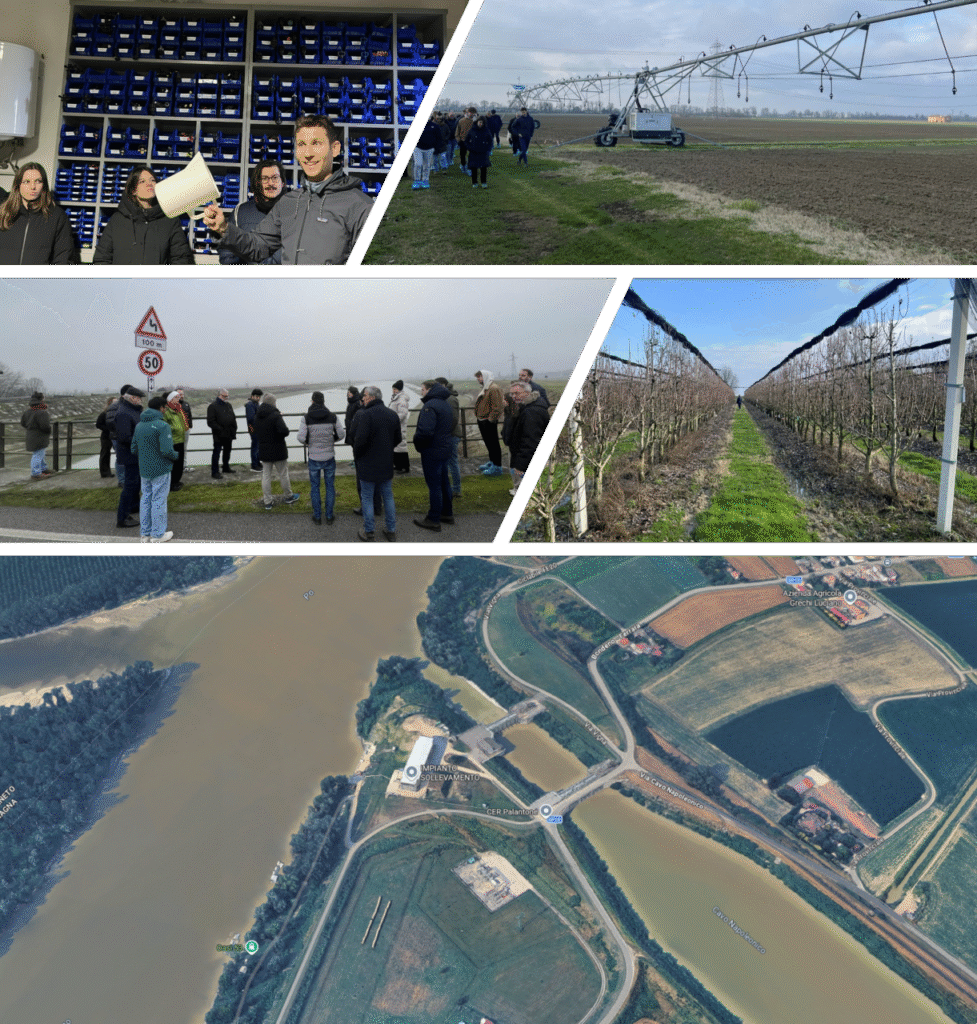
As part of the FARMWISE General Assembly held at the University of Bologna from 28th – 29th January, project partners took part in a field visit that brought the project’s systems-thinking approach to life. From experimental orchards and precision irrigation trials at Acqua Campus to the large-scale water infrastructure managed by Canale Emiliano Romagnolo (CER), […]
Nature-based solutions to enhance groundwater recharge: case study of a Runoff Attenuation Feature in the Wensum catchment, UK
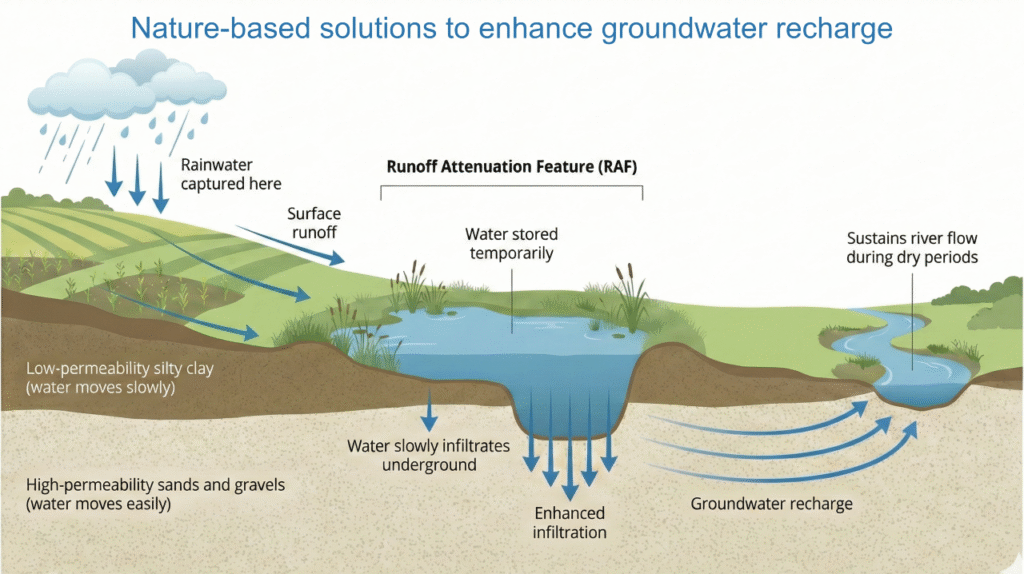
Water resources in the East of England are experiencing pressures arising from over-abstraction for both domestic and irrigation water supplies that threaten the ecology of chalk streams that are unique to the region. One strategy to support chalk streams is to employ nature-based solutions (NbS) to increase water availability, improve groundwater recharge and enhance river […]

